When it comes to real estate investing, especially in a booming market like Florida, one of the most important questions investors ask is: “Are DSCR loans non-recourse?” The answer could determine how much personal risk you’re willing to take on—and how well you can protect your assets while scaling your property portfolio.
Let’s break this down in plain English.
What Exactly Is a DSCR Loan?
A Debt Service Coverage Ratio (DSCR) loan is designed for real estate investors who want to qualify based on a property’s income—not their personal income. Instead of looking at your W-2s, tax returns, or employment records, lenders focus on the property’s cash flow.
The ratio compares the property’s net operating income (NOI) to its annual debt obligations.
- A DSCR of 1.25 means the property earns 25% more income than its loan payments.
- The higher your DSCR, the more comfortable the lender feels about approving your loan.
This approach makes DSCR loans ideal for self-employed investors, landlords, and those managing multiple rental properties—people who may not fit into traditional bank loan criteria.
So, Are DSCR Loans Non-Recourse?
Here’s where things get interesting.
Some DSCR loans are non-recourse—but not all.
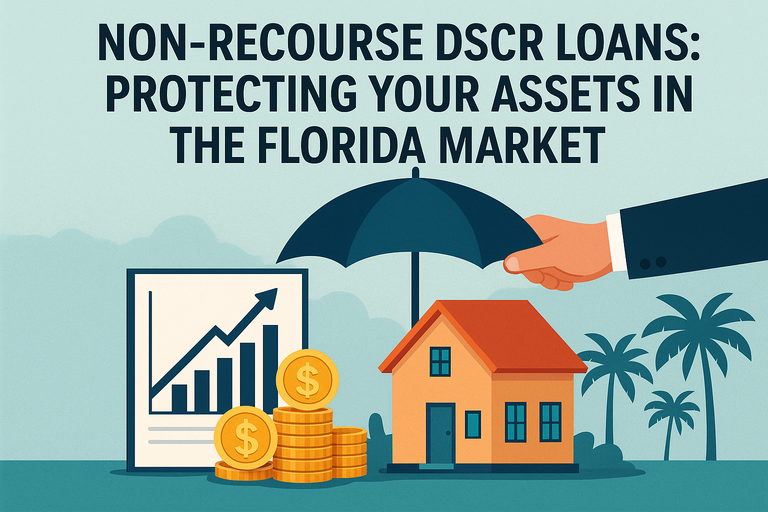
A non-recourse loan means that if you default, the lender can only seize the property used as collateral. They cannot go after your personal assets—like your savings, car, or other properties.
In contrast, a recourse loan allows lenders to pursue your personal assets if the sale of the property doesn’t cover the full loan balance.
So when applying for a DSCR loan in Florida, you need to ask the lender directly:
“Is this DSCR loan recourse or non-recourse?”
It’s a small question that could make a massive difference in your financial protection.
Why Non-Recourse DSCR Loans Matter in Florida
Florida’s real estate market is unique—vibrant, fast-moving, and increasingly dominated by investors. Cities like Miami, Tampa, and Orlando attract both domestic and international buyers who see long-term rental and appreciation potential.
But markets can turn quickly. A hurricane, insurance spike, or sudden vacancy can hit your rental income hard. If you’re holding multiple properties, one bad deal shouldn’t wipe out your personal finances.
That’s where non-recourse DSCR loans offer a critical advantage:
- Your personal liability stays limited to the property.
- You can take calculated risks with new investments.
- You can separate your business and personal wealth effectively.
For investors operating through LLCs or corporations, non-recourse DSCR loans also align better with your entity’s structure and risk management goals.
When Are DSCR Loans Typically Non-Recourse?
Not every lender offers non-recourse DSCR loans. However, many private lenders and non-bank institutions in Florida do.
You’re more likely to get non-recourse terms if:
- The loan is made to a business entity (LLC), not an individual.
- The property has a strong DSCR (usually above 1.25).
- You’re providing a significant down payment (often 20–25%).
- The property is stabilized and generating consistent rental income.
Lenders often include “bad boy carve-outs” in non-recourse loans—meaning if you commit fraud, fail to maintain insurance, or intentionally damage the property, the loan can become recourse.
Benefits of a Non-Recourse DSCR Loan
Let’s be real: investors love non-recourse loans for one simple reason—protection. But there’s more to it.
✅ Asset Protection: Your liability ends with the property itself.
✅ Peace of Mind: You can expand your portfolio without risking personal bankruptcy.
✅ Better for Partnerships: If you’re investing with others, non-recourse terms reduce personal disputes over liability.
✅ Flexible Qualification: Lenders don’t need your tax returns or W-2s—just proof the property can pay its own way.
In short, non-recourse DSCR loans let you play offense while staying on defense.
The Trade-Offs You Should Know
Of course, extra protection usually comes with a price tag. Non-recourse DSCR loans can have:
- Slightly higher interest rates (to offset lender risk)
- Tighter lending standards
- Larger down payment requirements
But for most seasoned investors, these trade-offs are worth the peace of mind and long-term flexibility.
How to Get a Non-Recourse DSCR Loan in Florida
If you’re shopping for a DSCR loan in the Florida market, here’s a simple process:
- Form an LLC for your investment property if you haven’t already.
- Prepare property financials—rental income statements, lease agreements, and expense reports.
- Check your DSCR ratio (lenders typically want at least 1.0–1.25).
- Shop around with private lenders or specialized DSCR loan providers who explicitly offer non-recourse options.
- Review the loan agreement carefully—look for words like “non-recourse,” “carve-outs,” or “limited recourse.”
If you’re unsure, it’s worth having a real estate attorney or mortgage advisor in Florida review the contract before you sign.
Final Thoughts
So, are DSCR loans non-recourse? They can be—and often are—if you work with the right lender and structure your deal properly.
In a state like Florida, where opportunities and risks often go hand in hand, a non-recourse DSCR loan is more than just a financing tool—it’s a shield for your financial future.
By focusing on properties with strong income potential and working with experienced DSCR lenders, you can keep growing your portfolio while keeping your personal assets safe.
Because in real estate, it’s not just about how much you make—it’s about how much you protect.