Skip to content

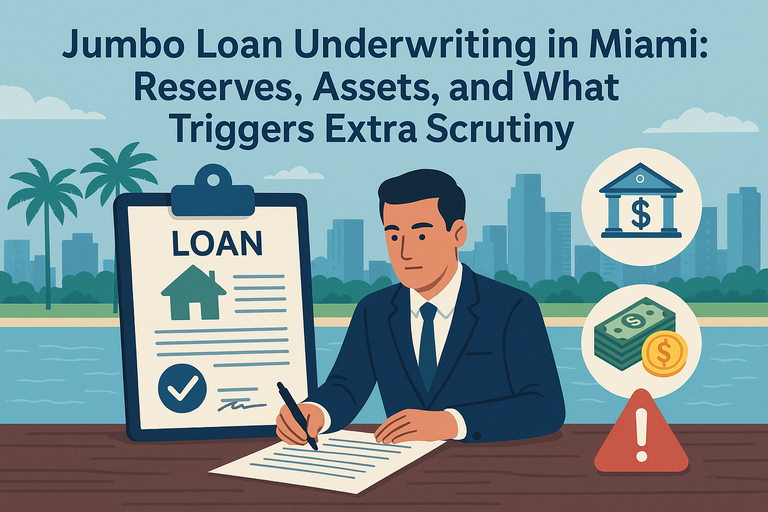
Jumbo loans are portfolio loans (not sold the same way conforming loans are), so underwriting is stricter for one reason: the lender is taking more concentrated risk. In Miami, that risk gets amplified by condos, insurance volatility, and large asset movements.
Here’s what underwriters focus on, what “reserves” really mean, and the exact issues that trigger extra conditions.
1) Reserves: what they are and what counts
Reserves are funds you must have left over after closing—measured in months of your total housing payment (often PITIA: principal, interest, taxes, insurance, and HOA if applicable). Even in agency guidelines, the concept is the same: funds-to-close are subtracted before determining what’s available for reserves.
What underwriters usually accept as reserves
- Checking/savings (depository accounts)
- Brokerage accounts (typically with haircuts/discounts)
- Retirement accounts (often discounted unless you can access them)
- In some cases, business assets—but only with strong documentation and ownership proof
Miami reality: jumbo lenders commonly want more reserves for condos, second homes, and high-balance loans (and even more if you’re self-employed). You’ll see jumbo lender guides explicitly tying reserve requirements and asset verification to program eligibility.
2) Assets: the lender cares where the money came from
Jumbo underwriting is obsessed with “source and seasoning” because it’s a fraud and repayment-risk filter.
The big rule borrowers miss: large deposits get questioned
A “large deposit” is commonly defined (in agency land) as a single deposit that exceeds 50% of total monthly qualifying income, which triggers extra documentation.
Even though jumbo is lender-specific, the behavior is the same: if your statements show a big unexplained deposit, expect suspense items.
If you want your internal companion piece here:
Business funds = extra scrutiny
If you’re using business funds for down payment or reserves, underwriters may require evidence the withdrawal won’t harm the business (cash flow analysis, balance sheet, working capital). That’s explicitly called out in jumbo correspondent guidelines.
3) What triggers extra scrutiny on jumbo loans (Top 10)
These are the issues that most often blow up timelines in Miami:
- Self-employed income (variable earnings, write-offs, complex entities)
- Business assets used to close (needs additional analysis)
- Large deposits / rapid money movement (needs sourcing)
- Gift funds (must be paper-trailed cleanly; no cash “gifts”)
- Condo risk: HOA reserves, delinquency, special assessments, master insurance (this is a Miami hotspot)
- High insurance premiums or hard-to-bind coverage (can change DTI and delay closing)
- Layered risk (high DTI + low reserves + complex income = underwriting slow-walk)
- Appraisal complexity (unique properties, luxury comps, waterfront nuance). Some jumbo programs require additional appraisal support at higher balances.
- Recent credit events (bankruptcy/foreclosure seasoning tends to be longer on jumbo)
- Non-citizen / nonstandard residency (more documentation, sometimes bigger reserve requirements)
4) How to get approved faster (what actually works)
- Keep funds stable: stop moving money around once you’re within 60–90 days of buying.
- Provide complete statements (all pages) and source large deposits upfront.
- If using business assets, prepare a clean CPA letter/balance sheet/cash flow package.
- For condos, order HOA docs early (budget, reserves, insurance, minutes).
- Build a realistic closing timeline—jumbo + condo + hurricane season is a delay cocktail.
Use this internal page to pressure-test your lender before you commit:
Bottom line
Jumbo underwriting in Miami is not “hard,” it’s unforgiving: reserves must be real, assets must be traceable, and condos/insurance create extra layers. If you want smooth approval, stop treating documentation like a last-minute task and start treating it like the product you’re selling to underwriting.