Skip to content

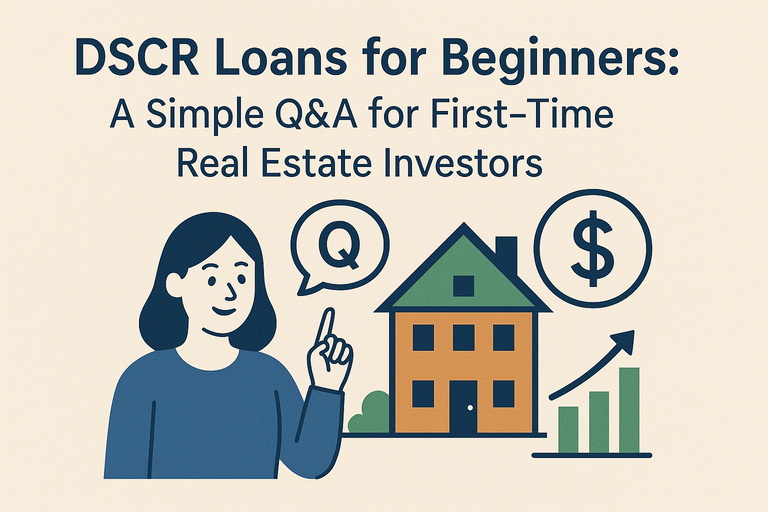
If you’re a first-time real estate investor, you’ve probably heard about DSCR loans and wondered what makes them different from traditional mortgages. DSCR loans are designed specifically for real estate investors—not homeowners—making them a great way to buy rental properties without needing to show your personal income.
In this beginner-friendly Q&A, we’ll explain what a DSCR loan is, how it works, who can qualify, and whether it’s the right fit for your investment goals.
Q1: What Is a DSCR Loan?
A DSCR loan, or Debt Service Coverage Ratio loan, is a type of mortgage designed for real estate investors. Instead of using your personal income, pay stubs, or tax returns to qualify, the lender looks at the income the property itself generates.
The idea is simple:
If the property earns enough rent to cover its mortgage payment (and ideally more), then it qualifies for financing.
Example:
If a property’s monthly rent is $2,000, and the total monthly loan payment (principal + interest + taxes + insurance) is $1,500, then the DSCR is:
DSCR = 2000 ÷ 1500 = 1.33
That means the property earns 1.33 times the amount needed to pay the loan each month—a healthy ratio for most lenders.
Q2: How Does a DSCR Loan Work?
With DSCR loans, lenders evaluate the property’s income potential, not the borrower’s W-2 job or personal income statements.
Instead of verifying employment or personal debt, lenders focus on three main factors:
- Property Income: Usually based on a rental appraisal or existing lease.
- Loan Amount & Interest Rate: Determines the monthly payment.
- DSCR Ratio: The rental income divided by loan expenses.
If the ratio meets the lender’s requirement—typically 1.0 to 1.25—the loan is approved. The higher the ratio, the stronger your loan application.
Q3: Can Anyone Get a DSCR Loan?
This is one of the most common questions for beginners: Can anyone get a DSCR loan?
The short answer is no—DSCR loans are for real estate investors only, not for buying your own home. You must use the property as an investment (either long-term rental or short-term Airbnb-style).
However, the good news is that DSCR loans are much easier to qualify for than traditional mortgages if you meet these general requirements:
- You own or are buying an income-producing property.
- You have a minimum credit score (usually 620+).
- You can make a down payment (typically 20–25%).
- The property’s rental income can cover the mortgage payment.
So while not everyone qualifies, any serious investor—even self-employed or 1099 earners—can apply and often get approved.
Q4: What Are the Benefits of a DSCR Loan?
Here’s why DSCR loans are popular among Florida investors, especially in markets like Miami or Tampa:
- No personal income verification
You don’t need tax returns, W-2s, or pay stubs. - Works for LLCs or investment entities
Many investors buy properties through an LLC for tax and liability benefits, and DSCR lenders allow that. - Scales easily for multiple properties
You can use DSCR loans to grow a portfolio quickly since lenders focus on property cash flow, not your personal debt-to-income ratio. - Flexible property types
DSCR loans often work for single-family homes, condos, multifamily buildings, and even short-term rentals. - Ideal for self-employed borrowers
Entrepreneurs and freelancers often struggle with traditional loans—DSCR loans remove that barrier.
Q5: What Are the Downsides or Risks?
While DSCR loans offer flexibility, there are trade-offs to understand:
- Higher interest rates: Typically 1–2% higher than conventional loans.
- Larger down payments: Most lenders require at least 20% down, sometimes 25–30%.
- Limited personal use: The property must remain an investment (no owner-occupied use).
- Tighter property cash flow: If rents drop or vacancies rise, your DSCR ratio can fall below acceptable levels, affecting refinancing options.
In short, DSCR loans favor financially stable investors who can handle occasional rental fluctuations.
Q6: How Is DSCR Calculated?
The Debt Service Coverage Ratio (DSCR) =
Net Operating Income (NOI) ÷ Total Debt Service (Loan Payment)
- 1.0 means the property breaks even.
- >1.0 means the property earns more than it costs to operate (good).
- <1.0 means the property doesn’t cover its debt—high risk for lenders.
Most DSCR lenders prefer 1.1–1.25 or higher to approve the loan.
Q7: How Can First-Time Investors Prepare for a DSCR Loan?
If you’re new to real estate investing, here’s how to prepare before applying:
- Research local rents: Use Zillow, Rentometer, or MLS data to estimate realistic income.
- Keep your credit clean: Aim for 680+ for better rates.
- Save for a solid down payment: 20–25% gives you stronger leverage.
- Form an LLC (optional): Helps protect your personal assets.
- Gather documents: Lease agreements, property appraisals, and insurance quotes.
- Choose an experienced DSCR lender: Look for those familiar with Florida markets if you’re investing locally.
Q8: Are DSCR Loans a Good Fit for First-Time Investors?
Yes—if your goal is to build a rental property portfolio rather than live in the home.
They’re ideal for:
- New investors with strong savings but limited personal income.
- Self-employed or 1099 borrowers.
- Buyers wanting to scale up quickly.
- Investors targeting Florida’s high-demand rental areas.
However, they’re not suitable for:
- Homebuyers seeking a primary residence.
- Investors with properties that can’t generate stable rent.
Q9: Where Can You Get a DSCR Loan?
You can find DSCR loans through:
- Non-bank lenders like Angel Oak Mortgage, Griffin Funding, or Longleaf Lending.
- Private or portfolio lenders who specialize in investor loans.
- Some smaller banks and credit unions offering DSCR programs.
Always compare rates, DSCR minimums, and loan terms before committing.
Conclusion
A DSCR loan is one of the most powerful financing tools for first-time real estate investors. It focuses on what matters most—the property’s income—not your personal job or tax returns.
So while not everyone can get a DSCR loan, any motivated investor who owns or wants to buy an income-producing property can qualify with the right preparation.
If you’re ready to start your rental portfolio, begin by calculating your property’s DSCR, improving your credit, and connecting with a lender who specializes in investor loans. It’s your first step toward financial freedom through real estate.