Skip to content

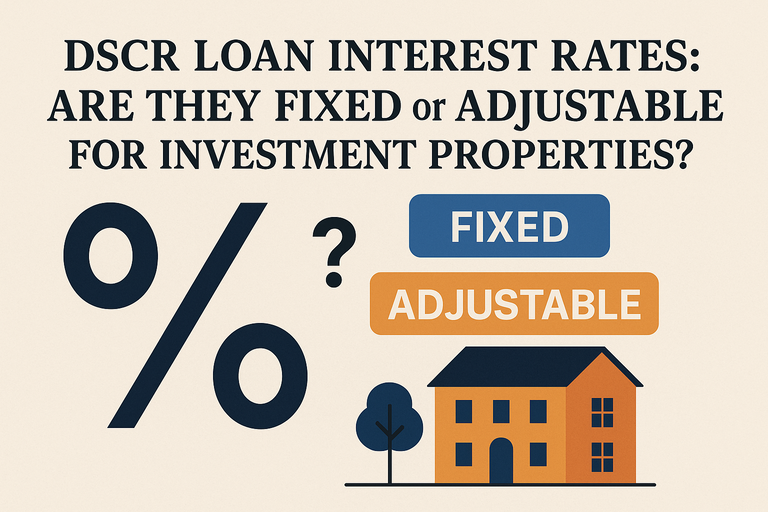
Interest rate structure significantly impacts real estate investment returns, affecting monthly cash flow, long-term profitability, and refinancing strategies. Investors exploring DSCR financing frequently ask: are DSCR loans fixed rate, or must investors accept adjustable rates with potential payment increases? Additionally, understanding what is the interest rate on a DSCR loan helps investors budget accurately and compare financing options. This comprehensive guide explores the full spectrum of DSCR loan rate structures available for Florida investment properties, current rate environments, and strategic considerations for selecting between fixed and adjustable options.
Are DSCR Loans Fixed Rate? Understanding Your Options
Yes—are DSCR loans fixed rate is answered affirmatively, though it’s not the complete picture. DSCR loans offer both fixed-rate and adjustable-rate options, providing investors flexibility to select rate structures aligning with their investment strategies, risk tolerance, and property holding periods.
Fixed-Rate DSCR Loans
Fixed-rate DSCR loans maintain consistent interest rates and monthly payments throughout the entire loan term, typically 30 years. These represent the most popular choice among Florida investors seeking payment predictability and protection against rising interest rate environments.
Available Fixed-Rate Terms:
- 30-Year Fixed: Most common; lowest monthly payments, highest total interest paid
- 25-Year Fixed: Slightly lower rates (0.125-0.25% reduction), higher monthly payments
- 20-Year Fixed: Lower rates, significantly higher payments, faster equity building
- 15-Year Fixed: Lowest rates available, substantially higher payments, rarely used for investment properties due to cash flow impact
Advantages of Fixed Rates:
- Payment stability for entire loan term
- Protection against interest rate increases
- Simplified cash flow projections and portfolio planning
- Easier property budgeting and tenant management
- Refinancing flexibility without payment shock concerns
Disadvantages of Fixed Rates:
- Higher initial rates compared to adjustable options (typically 0.5-1.0% higher)
- Less initial cash flow due to higher payments
- Prepayment penalties (common with DSCR loans) discourage early payoff or refinancing
Adjustable-Rate DSCR Loans (ARMs)
Adjustable-rate mortgages offer initial fixed-rate periods (typically 5, 7, or 10 years) followed by periodic rate adjustments based on market indices.
Common ARM Structures:
- 5/1 ARM: Fixed for 5 years, then adjusts annually
- 7/1 ARM: Fixed for 7 years, then adjusts annually
- 10/1 ARM: Fixed for 10 years, then adjusts annually
- 3/6 ARM: Fixed for 3 years, then adjusts every 6 months (less common)
Initial Rate Advantage: ARMs typically offer 0.5-1.0% lower rates than 30-year fixed options during the initial fixed period.
Rate Adjustment Structure:
- Based on indices like SOFR (Secured Overnight Financing Rate) plus lender margins (typically 2.5-3.5%)
- Annual or semi-annual adjustments after initial period
- Rate caps limiting adjustment amounts:
- Initial adjustment caps: 2-5% maximum increase
- Periodic caps: 1-2% maximum per adjustment
- Lifetime caps: 5-6% maximum above initial rate
Advantages of ARMs:
- Lower initial rates improving cash flow during early years
- Beneficial if planning to sell or refinance before adjustment period
- Potential for rate decreases if market rates fall (though less common)
- Better for short-term holds or fix-and-flip strategies
Disadvantages of ARMs:
- Payment uncertainty after initial fixed period
- Potential for significant payment increases if rates rise
- Complex rate adjustment calculations
- More difficult long-term budgeting and cash flow projections
- Risk of negative cash flow if rates increase substantially
What is the Interest Rate on a DSCR Loan? Current Market Rates
Understanding what is the interest rate on a DSCR loan requires examining multiple factors affecting pricing. As of late 2024/early 2025, DSCR loan rates for Florida investment properties typically range from 6.5% to 9.5% depending on various borrower and property characteristics.
Rate Determinants for DSCR Loans
Credit Score Impact:
- 740+ credit: 6.5-7.5% (best available rates)
- 700-739 credit: 7.0-8.0% (competitive rates)
- 680-699 credit: 7.5-8.5% (standard rates)
- 660-679 credit: 8.0-9.0% (higher rates)
- Below 660: 8.5-9.5%+ (premium pricing, limited options)
DSCR Ratio Influence:
- 1.25+ DSCR: Optimal pricing
- 1.0-1.24 DSCR: Rate increases of 0.25-0.50%
- 0.75-0.99 DSCR: Rate increases of 0.50-1.0%
Loan-to-Value (LTV) Effect:
- 75% LTV (25% down): Standard pricing
- 70% LTV (30% down): Rate reductions of 0.125-0.25%
- 65% LTV (35% down): Rate reductions of 0.25-0.50%
- 80% LTV (20% down): Rate increases of 0.25-0.50%
Property Type Considerations:
- Single-family homes: Best rates
- Condos/townhomes: Standard rates (slight premiums for non-warrantable condos)
- 2-4 units: Competitive rates, sometimes better than single-family
- Vacation rentals: Slight rate premiums (0.125-0.375%)
Rate Type Comparison:
- 30-year fixed: Baseline rates
- 5/1 ARM: 0.5-0.75% lower than 30-year fixed
- 7/1 ARM: 0.375-0.625% lower than 30-year fixed
- 10/1 ARM: 0.25-0.50% lower than 30-year fixed
Interest-Only Payment Options
Some DSCR lenders offer interest-only payment structures for 5-10 years, with rates typically 0.25-0.5% higher than fully amortizing loans.
Interest-Only Benefits:
- Maximum cash flow during interest-only period
- Ability to qualify for higher loan amounts
- Flexibility to deploy cash into additional investments
Interest-Only Risks:
- No principal reduction during interest-only period
- Payment shock when amortization begins (payments can increase 30-50%)
- Higher total interest paid over loan life
- Requires disciplined capital management and exit strategy
Strategic Rate Selection for Florida Investors
Choosing between fixed and adjustable rates requires analyzing your specific investment strategy:
Choose Fixed-Rate DSCR Loans When:
Long-Term Hold Strategy: Planning to own properties 10+ years benefits from payment stability and protection against rate increases.
Cash Flow Priority: Properties with tight margins need payment predictability to maintain positive cash flow.
Rising Rate Environments: When interest rates trend upward, locking fixed rates protects against future increases.
Portfolio Scaling: Building large portfolios with multiple properties requires consistent payment structures for simplified management.
Risk Aversion: Conservative investors prioritizing stability over maximum initial cash flow prefer fixed rates.
Example – Miami Beach Condo:
- Purchase price: $400,000
- 30-year fixed DSCR at 7.5%
- Monthly payment stability for 30 years
- Predictable cash flow despite market rate fluctuations
- Ideal for long-term wealth building strategy
Choose Adjustable-Rate DSCR Loans When:
Short-Term Holds: Planning to sell within 5-7 years makes ARM initial rate savings attractive without exposure to adjustment periods.
Refinancing Plans: Expecting property appreciation enabling refinancing before rate adjustments benefits from ARM discounts.
Fix-and-Flip Extended: Properties requiring 3-5 years of renovations and stabilization benefit from lower ARM rates before sale or refinance.
Cash Flow Optimization: Properties with strong DSCR ratios can absorb potential rate increases, making initial ARM savings worthwhile.
Falling Rate Expectations: If anticipating rate decreases, ARMs provide opportunity to benefit from declining rates.
Example – Orlando Vacation Rental:
- Purchase price: $350,000
- 7/1 ARM DSCR at 6.875% (vs. 7.5% fixed)
- Plan to refinance after 5 years of appreciation
- Initial rate savings of 0.625% improves cash flow
- Exit before adjustment period eliminates rate increase risk
Hybrid Strategy: Rate Type Diversification
Sophisticated Florida investors often diversify rate structures across portfolios:
Portfolio Approach:
- Core long-term holdings: 30-year fixed rates for stability
- Opportunistic acquisitions: ARMs for initial cash flow maximization
- Vacation rentals: Short-term ARMs matching seasonal income patterns
- Value-add properties: ARMs during renovation periods before refinancing
This diversification balances overall portfolio risk while optimizing individual property financing.
Florida-Specific Rate Considerations
Hurricane and Flood Insurance Impact: Rising Florida insurance costs affect affordability regardless of interest rates. Fixed rates provide certainty on the mortgage component while insurance remains variable.
Market Appreciation: Florida’s strong appreciation trends support ARM strategies—investors can refinance to fixed rates after building equity through appreciation.
Seasonal Income Properties: Short-term rental properties with seasonal income fluctuations pair well with initial ARM rate savings during stabilization periods.
Condo Market Dynamics: Miami and coastal condos may benefit from fixed rates given HOA fee uncertainty and potential special assessments.
Rate Shopping and Timing Strategies
Multiple Lender Comparisons: DSCR rates vary significantly between lenders. Working with mortgage brokers accessing multiple lenders ensures competitive pricing.
Rate Lock Timing: DSCR lenders typically offer 30-60 day rate locks. Time applications when rates dip rather than waiting for perfect bottoms.
Point Buy-Down Evaluation: Calculate break-even on purchasing discount points (typically 0.25-0.375% rate reduction per point paid).
Prepayment Penalty Trade-Offs: Some lenders offer lower rates in exchange for longer prepayment penalties. Evaluate based on planned holding period.
Current Rate Environment Strategy
In today’s elevated rate environment (6.5-9.5% range), consider:
Short-Term ARMs: If expecting rate decreases within 5-7 years, ARMs position for refinancing opportunities.
Fixed Rate Locks: If viewing current rates as potentially lower relative to future markets, locking long-term fixed rates provides protection.
Hybrid Approach: Mix fixed and adjustable across portfolio balancing risk and opportunity.
The Verdict: Fixed vs. Adjustable DSCR Loans
Are DSCR loans fixed rate? Yes—and they’re also available as adjustable rates, providing investors flexibility to optimize financing based on individual strategies. Understanding what is the interest rate on a DSCR loan (currently 6.5-9.5% depending on multiple factors) helps investors budget accurately and compare options.
Fixed rates offer stability, predictability, and peace of mind—ideal for long-term holds and risk-averse investors. Adjustable rates provide initial savings and flexibility—optimal for short-term strategies and appreciation-focused investments.
The optimal choice depends on your holding period, risk tolerance, market outlook, and portfolio strategy. Many successful Florida investors use both structures strategically across different properties.
Ready to explore both fixed and adjustable DSCR loan options for your Florida investment properties? Connect with mortgage professionals who can provide current rate quotes for both structures, analyze your specific scenario, and recommend the optimal rate type for your investment strategy and goals.