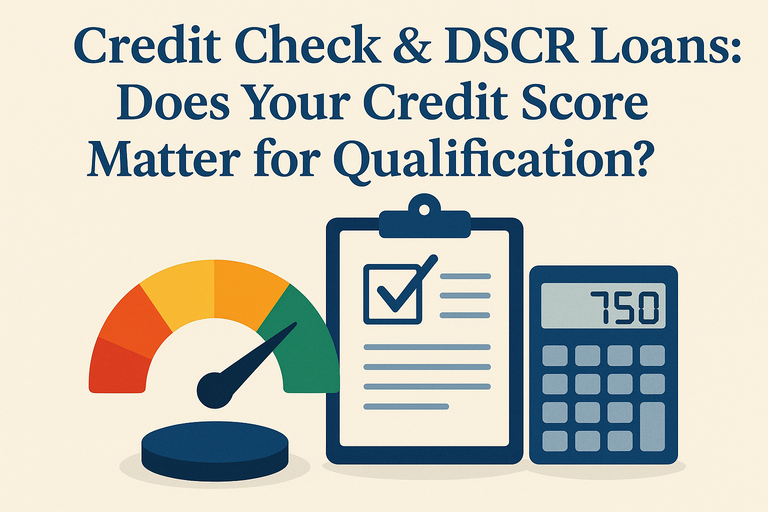
DSCR loans revolutionize investment property financing by eliminating personal income verification, leading many investors to assume credit requirements are equally relaxed. A common question arises: do DSCR loans require credit check, and if so, how much does credit score matter when property income drives qualification? Understanding the role of credit in DSCR lending—and recognizing that while personal income doesn’t matter, personal creditworthiness definitely does—helps Florida investors prepare applications strategically and optimize their credit profiles for best rates and terms.
Do DSCR Loans Require Credit Check? The Definitive Answer
Yes—do DSCR loans require credit check is answered affirmatively. Every DSCR lender performs credit checks, and does DSCR loan check credit as part of standard underwriting. While DSCR loans remove personal income verification, they absolutely evaluate personal credit history, payment patterns, and overall creditworthiness. Credit scores significantly impact qualification, interest rates, loan terms, and maximum loan amounts available to investors.
Why Credit Matters Despite No Income Verification
Default Risk Assessment: Even with strong property income, lenders evaluate whether borrowers historically meet financial obligations. Credit history predicts future payment behavior better than any other metric.
Personal Guarantee: DSCR loans require personal guarantees—borrowers remain personally liable for repayment. Lenders need assurance guarantors honor obligations based on credit track records.
Rate Pricing: Credit scores directly determine interest rates. The difference between 680 and 740 credit scores can mean 0.5-1.0% rate variation—thousands in annual interest costs.
Secondary Market Standards: Lenders selling DSCR loans to investors must meet credit score minimums. Most secondary market investors require 660-680+ scores.
Portfolio Risk Management: Lenders maintaining loans in portfolio use credit scores to balance overall portfolio risk, charging premium rates for lower scores while accepting them selectively.
Credit Score Requirements for DSCR Loans
Minimum Credit Score Thresholds
Standard Programs: 660-680 minimum for most Florida DSCR lenders. This represents the floor for accessing mainstream DSCR financing.
Preferred Programs: 700-720 minimum for optimal rates and maximum program flexibility. Borrowers in this range access widest lender selection.
Exceptional Programs: 740+ scores unlock best rates (often 0.5-0.75% lower than 680 scores) and most favorable terms including potentially lower down payments.
Subprime Programs: 620-659 scores occasionally accepted with significant compensating factors (35-40% down payments, 1.5+ DSCR ratios, substantial reserves). Rates run 1-2% higher than standard programs.
Below 620: Very limited options; hard money or private lenders may be only alternatives at premium rates (9-12%+).
Credit Score Impact on Interest Rates
Real Rate Variations – $350,000 Florida DSCR Loan:
- 760+ Credit: 7.0% rate = $2,329/month payment
- 740-759 Credit: 7.25% rate = $2,388/month payment
- 720-739 Credit: 7.5% rate = $2,448/month payment
- 700-719 Credit: 7.75% rate = $2,508/month payment
- 680-699 Credit: 8.0% rate = $2,568/month payment
- 660-679 Credit: 8.5% rate = $2,690/month payment
Analysis: The difference between 760 and 660 credit scores costs $361 monthly or $4,332 annually—substantial impact over loan life.
What Credit Reports Reveal to DSCR Lenders
Payment History: Late payments, particularly on mortgages, dramatically impact approval. Recent late payments (within 12-24 months) raise serious concerns.
Credit Utilization: High credit card balances relative to limits (above 30%) suggest financial stress even if income isn’t evaluated.
Recent Derogatory Marks: Collections, charge-offs, judgments, or liens indicate unresolved financial issues requiring explanation or seasoning periods.
Bankruptcy: Most DSCR lenders require 2-4 years since bankruptcy discharge, with longer periods yielding better rates.
Foreclosure/Short Sale: Typically require 3-5 years seasoning. Recent foreclosures often disqualify regardless of current property income.
Credit Inquiries: Multiple recent inquiries (10+ in 6 months) may raise fraud concerns, though legitimate mortgage shopping inquiries are typically grouped.
Account Mix: Diverse credit types (installment loans, revolving credit, mortgage history) demonstrate credit management experience.
How Credit Interacts with DSCR Qualification
Credit as Compensating Factor
While property income determines base qualification, credit score serves as crucial compensating factor:
Strong Credit (740+) Enables:
- Lower DSCR ratio acceptance (1.0-1.15 may qualify)
- Reduced down payment requirements (potentially 20% instead of 25%)
- Lower interest rates reducing monthly debt service
- Larger loan amounts for portfolio expansion
- Faster processing and fewer documentation requests
Weak Credit (660-680) Requires:
- Higher DSCR ratios (1.25-1.35 minimum)
- Larger down payments (25-30%)
- Substantial reserves (12+ months)
- Explanation letters for derogatory items
- Possible rate lock delays pending additional review
Credit Score Optimization Strategies
Timing Credit Pulls: DSCR lenders pull credit during application. Optimize scores before applying:
- Pay down credit card balances below 30% utilization (ideally under 10%)
- Dispute inaccurate items 60-90 days before application
- Avoid new credit applications 6 months before DSCR loan application
- Make all payments on time for 12+ months before applying
Strategic Tradeline Management:
- Keep old accounts open (length of credit history matters)
- Request credit limit increases on existing cards (improves utilization)
- Become authorized user on established accounts (for limited credit history)
- Pay down installment loans strategically (doesn’t help as much as credit card paydowns)
Addressing Derogatory Items:
- Negotiate pay-for-delete on collections before applying
- Provide written explanations for legitimate issues (medical collections, identity theft)
- Wait for seasoning periods on bankruptcies and foreclosures
- Resolve outstanding judgments and tax liens before applying
Does DSCR Loan Check Credit During or After Closing?
Initial Credit Check (Application)
Hard credit pull occurs during application, impacting credit scores by 2-5 points typically. This inquiry remains visible on credit reports for 2 years but only affects scores for 12 months.
All Three Bureaus: Most DSCR lenders pull credit from all three bureaus (Experian, Equifax, TransUnion), using middle scores for qualification. If two scores pulled, lenders use lower of the two.
Credit Monitoring During Processing
Many lenders perform “soft pulls” during processing ensuring no major changes occur between application and closing:
- New collections appearing
- Large credit balance increases
- Account charge-offs
- Bankruptcy filings
- New loan inquiries
Critical: Avoid major credit changes during DSCR loan processing. New car loans, large credit card charges, or new mortgage applications can jeopardize approvals even after conditional approval.
Post-Closing Credit Checks
DSCR lenders don’t typically monitor credit after closing. Once loans close, borrowers can freely manage credit without impacting existing DSCR loans (though future refinances or new DSCR loans will require fresh credit pulls).
Special Credit Situations for Florida Investors
Multiple Properties and Credit
Positive Impact: Successfully managing multiple financed properties demonstrates creditworthiness, potentially offsetting modestly lower scores.
Negative Impact: Late payments on existing investment properties raise major concerns. Perfect payment history on rental properties weighs heavily in DSCR underwriting.
Foreign Nationals
Foreign investors without US credit history face challenges:
Solutions:
- Larger down payments (35-40%) may compensate for no US credit
- International credit reports sometimes accepted
- Reference letters from foreign banks
- Significant US asset documentation
- Some lenders specialize in foreign national DSCR programs
Recent Credit Events
Short Sales/Foreclosures: Florida saw significant foreclosure activity during 2008-2012. Investors affected need:
- 3-5 years seasoning minimum
- Re-established credit since event
- Explanation letters documenting circumstances
- Strong payment history post-event
Business Credit vs. Personal Credit
Critical Distinction: Even when purchasing through LLCs, DSCR lenders evaluate personal credit, not business credit. LLC ownership doesn’t shield personal credit from scrutiny since personal guarantees are required.
Credit-Building Strategies for Aspiring DSCR Borrowers
6-12 Month Credit Improvement Plan
Month 1-2:
- Pull credit reports from all three bureaus
- Dispute inaccuracies
- Document any legitimate derogatory items requiring explanation
- Calculate current utilization ratios
Month 3-6:
- Pay down credit card balances below 30% utilization
- Make all payments on time
- Avoid new credit applications
- Request credit limit increases strategically
Month 7-12:
- Monitor score improvements monthly
- Maintain low utilization and perfect payment history
- Build cash reserves simultaneously
- Resolve any remaining collections or judgments
Target: 700+ credit score provides access to competitive DSCR programs with favorable rates.
The Credit and Property Income Balance
Understanding does DSCR loan check credit clarifies that DSCR lending evaluates two primary factors:
Property Income (Primary): Determines base qualification through DSCR ratio calculations. Strong property income makes weak credit more acceptable but doesn’t eliminate credit requirements.
Personal Credit (Secondary but Critical): Determines pricing, terms, and compensating factors. Strong credit makes marginal property income more acceptable through better rates and lower required DSCR ratios.
Optimal Position: Florida investors combining 720+ credit scores with properties achieving 1.25+ DSCR ratios access best rates, widest lender selection, and maximum portfolio-building flexibility.
Common Credit Myths in DSCR Lending
Myth: “DSCR loans don’t check credit since they don’t verify income.” Reality: Credit checks are mandatory; credit scores significantly impact rates and terms.
Myth: “Poor credit doesn’t matter if property cash flow is strong.” Reality: Poor credit increases rates 1-2%, potentially turning positive cash flow properties into negative cash flow situations.
Myth: “Business credit scores matter for LLC purchases.” Reality: Personal credit of guarantors/members matters exclusively, regardless of ownership structure.
Myth: “Credit checks don’t matter after loan closing.” Reality: While closed loans aren’t monitored, future refinances or additional DSCR loans require fresh credit evaluations.
The Bottom Line on Credit and DSCR Loans
Do DSCR loans require credit check? Absolutely—credit evaluation remains fundamental to DSCR lending despite elimination of income verification. Does DSCR loan check credit as rigorously as conventional loans? Yes, with similar credit score thresholds and payment history scrutiny.
The distinction is that DSCR loans evaluate property income for base qualification while using personal credit for risk assessment and rate pricing. This combination creates opportunities for self-employed investors and portfolio builders whose income documentation challenges conventional lending but whose credit demonstrates financial responsibility.
Ready to explore DSCR financing with realistic credit expectations for Florida investment properties? Connect with mortgage professionals who can evaluate your credit profile, recommend improvement strategies if needed, and match you with DSCR programs suited to your current credit standing while helping you access optimal rates available.