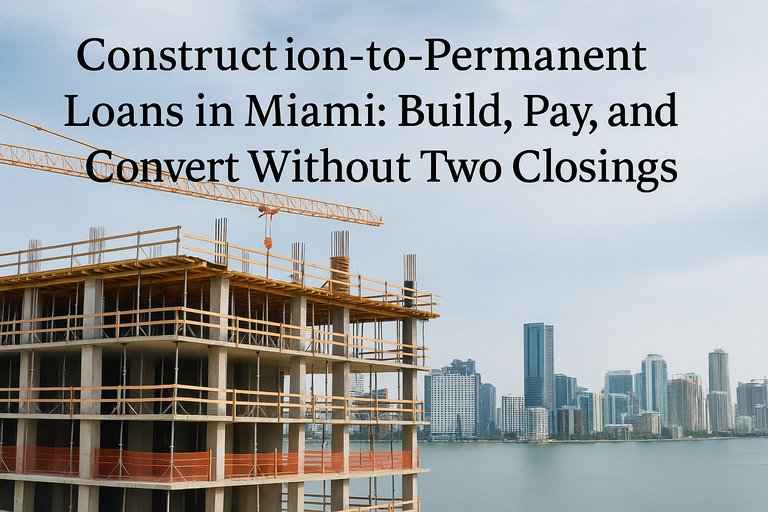
A construction-to-permanent loan (often called a “one-time close”) is designed for buyers who want to finance the land (or lot) + construction costs now, then automatically convert into a long-term mortgage when the home is finished—without doing a second closing.
It’s powerful. It’s also one of the easiest loans to derail in Miami if you treat it like a normal purchase mortgage.
How it works (the simple version)
A construction-to-permanent loan has two phases:
- Construction phase
- Funds are released in draws (chunks) as construction progresses.
- You usually make interest-only payments on the amount drawn (not the full loan) during the build.
- Permanent phase
- When the home is complete (and passes inspections / CO issued), the loan converts into a standard mortgage (often 30-year fixed or other terms).
- You start making full principal + interest payments based on the permanent loan terms.
Key benefit: you avoid the risk and cost of trying to refinance into a new loan later (the “two closing” approach).
What you pay during construction (and why people miscalculate)
During the build, you’re typically paying interest on the amount that has actually been disbursed. That sounds cheaper—and early on, it is.
But here’s the part borrowers miss: delays and change orders extend the construction phase. Every extra month is more interest, more insurance time, and more exposure to cost overruns.
The 6 underwriting hurdles that matter most in Miami
1) Builder approval (not optional)
Most lenders won’t lend unless the builder is vetted (license, insurance, experience, financial stability). If your builder can’t or won’t provide documentation, the loan stalls.
2) Plans + specs must be detailed
Underwriting wants a clear scope:
- plans, specs, budget, timeline
- itemized cost breakdown
- contingency reserve (often required)
Vague plans = underwriting conditions = delays.
3) Appraisal is based on the future home (“as-completed”)
The appraisal is usually based on plans and specs, not the current dirt. If the projected value doesn’t support the build cost, you’ll need:
- more down payment, or
- a smaller scope, or
- a different lot/build plan
4) Reserves and cash buffers matter more than a normal mortgage
Construction loans are allergic to borrowers with no margin. Lenders commonly want proof you can handle:
- overruns
- delays
- carrying costs
5) Permits + inspections can stretch timelines
Miami-Dade permitting and inspections can be slow. Your loan structure needs realistic time buffers, or you’ll risk extension costs and stress.
6) Insurance can get complicated
You may need:
- builder’s risk policy during construction
- homeowners insurance ready at conversion
- possibly flood insurance depending on location
Insurance delays can block conversion.
“Without two closings” doesn’t mean “without risk”
A one-time close reduces refinancing risk later—but it concentrates risk upfront:
- If costs rise, you may need more cash.
- If the builder underperforms, draws get delayed.
- If the timeline blows up, you pay more interest and extension fees.
This is why the best borrowers treat construction-to-perm like a project finance deal, not a home loan.
How to keep it from turning into a nightmare (practical playbook)
- Lock your builder early and make sure they’re lender-friendly.
- Over-document: plans, specs, bids, allowances, budget.
- Pad your timeline (assume delays).
- Expect change orders and hold a real contingency reserve.
- Keep your bank activity clean (no messy large deposits right before underwriting).
- Don’t shop lots without confirming flood/insurance implications.
- Custom build financing overview:
https://mymiamimortgagebroker.com/financing-custom-home-building-miami-mortgage-options/ - Lender vetting questions (critical for construction loans):
https://mymiamimortgagebroker.com/questions-to-ask-a-mortgage-lender-before-applying/
Bottom line
A construction-to-permanent loan is the cleanest way to build and then convert into a long-term mortgage without gambling on a future refinance. But it only works smoothly if you bring three things: a document-ready builder, a realistic budget, and enough reserves to survive delays.