When applying for a Debt Service Coverage Ratio (DSCR) loan, one of the most common questions real estate investors ask is:
“Does a DSCR loan require an appraisal?”
The short answer is yes—almost always. But the reason for it and how it works is a bit different than with traditional home loans.
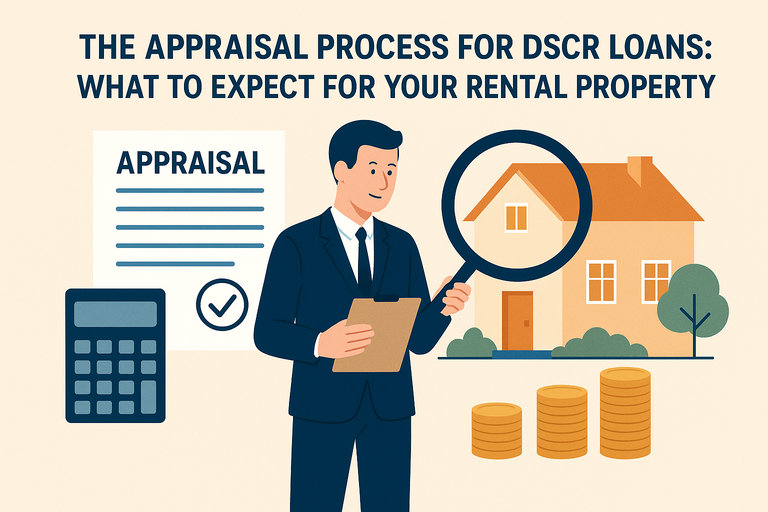
In this article, we’ll break down the appraisal process for DSCR loans, why it matters, and what you can expect as a rental property investor.
Why Appraisals Matter for DSCR Loans
Unlike conventional mortgages, DSCR loans don’t rely on your personal income, tax returns, or W-2s. Instead, lenders focus on how much income the property itself can generate compared to the loan payment.
That’s where the appraisal comes in.
The appraisal determines the property’s market value and rental income potential, which are both critical in calculating the Debt Service Coverage Ratio (DSCR).
In simple terms, lenders need to know:
- How much the property is worth in today’s market.
- How much rental income it can realistically produce.
These two pieces of information tell lenders whether the property can support its own debt—and that’s the entire foundation of a DSCR loan.
Does a DSCR Loan Always Require an Appraisal?
In almost every case, yes. Lenders use appraisals to confirm both property value and rental income potential.
However, there are some exceptions:
- If you’re refinancing and recently had an appraisal (within the past 6–12 months), some lenders may waive a new one.
- If the property is purchased below market value (such as through a distressed sale), the lender might use a hybrid valuation or drive-by appraisal.
But generally, if you’re applying for a new DSCR loan, expect to go through a full appraisal process.
What Kind of Appraisal Is Done for DSCR Loans?
The type of appraisal depends on the property.
1. Standard Appraisal (for Single-Family or 1–4 Unit Rentals)
For smaller residential investment properties, lenders typically order a Uniform Residential Appraisal Report (URAR).
This includes:
- Comparable sales analysis (what similar homes sold for nearby)
- Market condition review
- Interior and exterior photos
- A value conclusion
In many DSCR loans, the appraiser also completes a rental survey to estimate fair market rent—used to determine the property’s cash flow potential.
2. Commercial or Multi-Unit Appraisal (5+ Units)
For larger apartment buildings or mixed-use properties, appraisers use an income-based approach, where value is determined by the property’s net operating income (NOI) and market cap rate.
This is especially relevant for investors in Florida’s growing rental markets like Miami, Tampa, and Jacksonville, where multi-family and short-term rental properties are on the rise.
How the Appraisal Affects Your DSCR Ratio
Remember, the DSCR measures how well a property’s income covers its debt obligations:
[
\text{DSCR} = \frac{\text{Net Operating Income (NOI)}}{\text{Annual Debt Payments}}
]
Lenders typically look for a minimum DSCR of 1.0 to 1.25, depending on their risk tolerance.
If your appraisal shows a lower market rent than expected, your DSCR ratio could drop—making it harder to qualify or possibly requiring a higher down payment.
On the other hand, a strong appraisal with high rental comps can boost your DSCR and improve your loan terms.
That’s why preparing for the appraisal is so important.
How to Prepare for a DSCR Appraisal
A little preparation goes a long way in helping your property appraise well. Here’s how to get ready:
- Clean and Stage the Property:
First impressions matter—even for appraisers. A clean, well-maintained property signals higher market value. - Provide Rental Data:
Share any existing lease agreements, rental income statements, or short-term rental performance data. - Highlight Upgrades:
Document recent renovations, upgrades, or improvements (like a new roof, HVAC, or flooring). These often increase appraised value. - Know the Market:
Have a sense of nearby comparable properties and their rental rates. Appraisers often appreciate when owners provide realistic local data. - Be Available:
Make sure the appraiser can easily access all units and common areas without delay.
What Happens After the Appraisal
Once the appraisal is complete, the report goes directly to the lender. Here’s what typically follows:
- Lender Review: They analyze the appraised value and rental estimate to verify that the property meets their DSCR criteria.
- Revisions (if needed): Occasionally, lenders may question the appraisal or order a second opinion if the value seems off.
- Loan Decision: If the DSCR and loan-to-value (LTV) ratios meet their requirements, your financing moves forward.
If the appraisal comes in lower than expected, you still have options—such as increasing your down payment, renegotiating the purchase price, or choosing a smaller loan amount.
Common Appraisal Delays and How to Avoid Them
Florida’s real estate market can be busy, especially in high-demand areas. Some common appraisal-related delays include:
- Appraiser shortages (in fast-growing counties)
- Incomplete property access (tenants not available)
- Missing documentation (like leases or financials)
To avoid delays, schedule the appraisal early and ensure your property is easy to inspect.
Final Thoughts
So, does a DSCR loan require an appraisal?
Yes—and for good reason.
The appraisal ensures that the property’s value and income potential are strong enough to support the loan. It’s not just a lender’s formality; it’s a critical step that protects both you and your financing partner.
By understanding how the appraisal process works and preparing accordingly, you can improve your chances of a smooth approval—and secure a DSCR loan that truly fits your investment goals.
In the world of real estate investing, the numbers don’t lie—and the appraisal tells the real story.