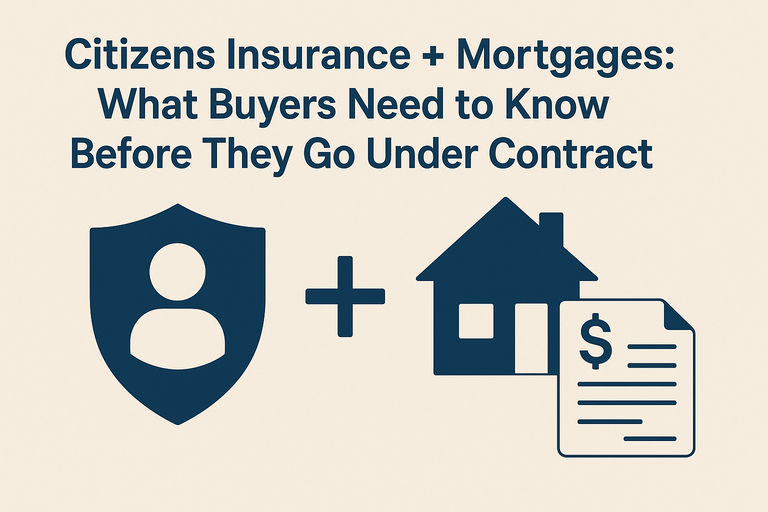
If you’re counting on Citizens Property Insurance to make the deal work, you need to treat insurance like a loan condition, not an afterthought. In Miami, insurance is one of the most common reasons closings get delayed or budgets blow up—because the lender won’t fund without proof of acceptable coverage.
1) Citizens isn’t “just another insurer” — it’s the insurer of last resort
By law, Citizens exists to provide coverage when applicants can’t procure insurance in the voluntary/private market.
That matters because it often comes with stricter documentation, eligibility steps, and potential future changes in carrier (see depopulation below).
What can go wrong for mortgage closings (and how to prevent it)
2) Citizens may require inspections and updated forms (timing matters)
Citizens explicitly requires a 4-point inspection for certain property types (e.g., homeowners/dwelling/mobile home) when the property is more than 20 years old.
And Citizens updated its Roof Inspection and 4-Point Inspection forms in March 2025 and expects inspectors/agents to use them.
Why you should care before contract: if the home is older (common in Miami-Dade), you may need inspection scheduling + re-inspections + follow-up repairs just to bind coverage. That can wreck a tight closing timeline.
3) “Binder in hand” is not optional for the lender
Your lender will require proof of insurance (often a binder/policy declarations + paid premium evidence) before closing. If they don’t have it, lenders can place their own coverage (lender-placed insurance), which is usually more expensive and protects the lender—not you.
Practical takeaway: don’t wait until underwriting asks for it. Start insurance quoting the moment you’re serious about a property.
4) Citizens can still cancel a new policy if underwriting requirements aren’t met
Citizens has a defined underwriting “discovery period” for new business (60 days since July 1, 2023) during which it can cancel if requirements aren’t satisfied.
Why this matters for mortgages: you don’t want a policy that’s shaky or issued on incomplete info. A cancellation after closing is a disaster (and can trigger lender-placed insurance).
The Citizens “depopulation” issue buyers ignore (but shouldn’t)
5) You may be moved from Citizens to a private insurer later
Citizens runs a Depopulation Program matching policies to private insurers interested in assuming them, as required by Florida law.
Florida’s Office of Insurance Regulation (OIR) also maintains info on approved “take-out” companies.
What that means for buyers: your insurance cost and carrier may change after closing. You need budget flexibility.
What you should do before you go under contract (non-negotiable)
6) Do these 6 checks upfront
- Ask the seller for the current declarations page (carrier, premium, deductibles, effective dates).
- If the home is older, assume you’ll need a 4-point and possibly a roof form—plan time for it.
- Get quotes early and confirm the agent can produce a binder fast.
- Stress-test your payment: insurance can change your escrow and DTI.
- Confirm if the property needs a wind mitigation report to reduce premium and stabilize approval odds (this can materially help in Miami).
- Make your lender answer insurance questions before you sign anything:
Bottom line
Citizens can be a workable solution—but it has process, documentation, and timing that can collide with your mortgage closing. Start insurance work before contract, expect inspections on older homes, and budget for the possibility of later carrier changes through depopulation.