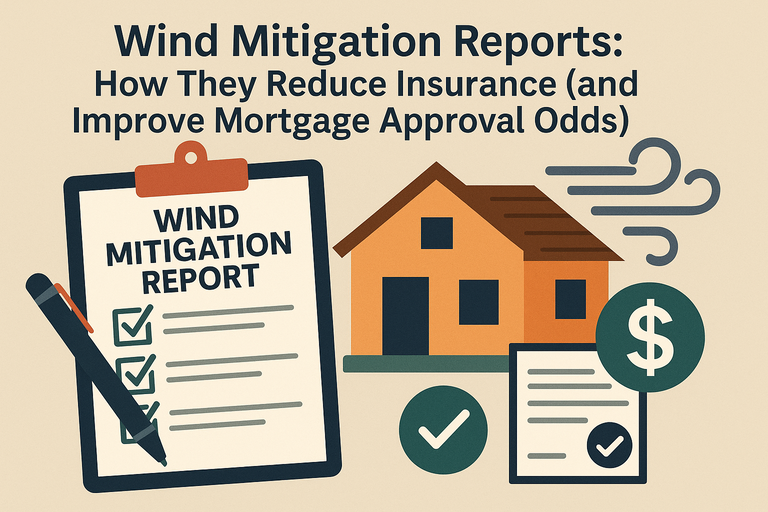
In Miami, a wind mitigation report isn’t “nice paperwork.” It can directly lower your homeowners insurance premium and, more importantly, reduce the chance your mortgage gets delayed because insurance comes in too expensive or too slow.
A wind mitigation inspection documents hurricane-resistance features using Florida’s Uniform Mitigation Verification Inspection Form (OIR-B1-1802).
What a wind mitigation report is (and what it’s not)
A wind mitigation report is an insurance-focused inspection that verifies features such as:
- roof covering and roof deck attachment
- roof-to-wall connections (clips/straps)
- roof shape (hip vs gable)
- opening protection (impact windows/shutters)
- secondary water resistance (SWR)
- building code compliance (including HVHZ standards for Miami-Dade/Broward)
It is not a full home inspection and not the same as a 4-point inspection.
How it lowers insurance in Florida
Florida requires insurers to offer windstorm mitigation discounts/credits for homes with verified wind-loss reduction features.
Insurers (including Citizens) typically apply discounts when the features are documented through a wind mitigation inspection/report.
Translation: the report is how you convert “this house has upgrades” into “the carrier must price them.”
Why it can improve mortgage approval odds (the part buyers miss)
Mortgage approvals don’t fail only on credit and income. They fail on payment shock—and in Miami, insurance is a major driver of the final payment.
A strong wind mitigation report can help in 3 ways:
1) Keeps your monthly payment inside DTI limits
Insurance premiums roll into your escrowed payment for most loans. If the premium spikes late, your DTI can jump and trigger re-underwrite or denial. A wind mitigation discount can reduce that risk.
2) Speeds up insurance binding (less last-minute chaos)
Many closings stall because the lender needs a binder with correct coverage, effective dates, and premium. Having wind mitigation documentation ready can make quoting/binding smoother—especially with carriers that want proof for discounts.
3) Helps in “hard-to-insure” situations
Older roofs, questionable attachments, or lack of opening protection can push you into fewer insurance options or higher deductibles. Mitigation documentation can separate you from other “risky” submissions.
If you want a related internal read on how climate/insurance pressure collides with underwriting in Miami, interlink this:
What features usually move the needle most
Not every checkbox gives a meaningful discount. The features commonly emphasized in state guidance and insurer documentation include strengthening the roof system and opening protection.
In practice, the biggest premium impacts often come from combinations like:
- verified roof-to-wall connectors + strong roof deck attachment
- impact-rated opening protection
- SWR (when properly documented)
- code-era compliance (and HVHZ-specific standards where applicable)
The mistakes that waste time (and get you little/no discount)
Mistake 1: Using photos or “homeowner statements” instead of acceptable documentation
Citizens (and many carriers) require documentation that clearly supports the wind features per the latest OIR form standards.
Mistake 2: Letting the report be sloppy or unverifiable
The form itself warns about consequences for fraudulent or negligent reporting.
Bad reports get challenged, and that can delay insurance binding.
Mistake 3: Waiting until you’re a week from closing
If you’re under contract, the smart move is to gather mitigation docs immediately so insurance and escrow numbers stabilize early.
Quick action checklist (Miami buyers)
- Ask the seller for any existing wind mitigation report (and the date)
- If none, schedule one early (don’t wait for underwriting)
- Send the report to your insurance agent for quoting
- Send the premium + binder to your lender ASAP
- Don’t guess—verify opening protection, roof attachments, and permits where needed
For the questions that keep lenders honest about insurance timing and payment changes, use:
Bottom line
A wind mitigation report is one of the few documents that can lower your premium, stabilize your monthly payment, and reduce closing risk in Miami—because it turns hurricane-resistance from “claims” into verified pricing credits. (FLDFS)