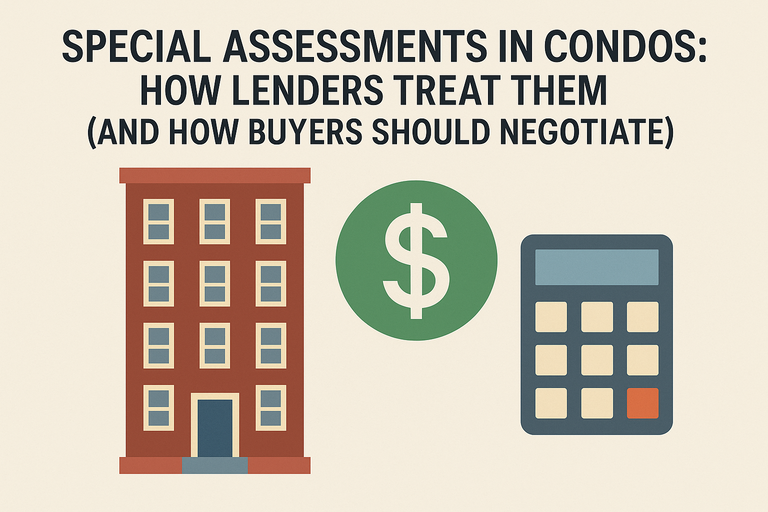
A special assessment in a Miami condo isn’t automatically a deal-killer. But it is a signal to lenders that the building may have financial stress, deferred maintenance, or insurance/budget problems. And lenders treat signals like that with one response: more scrutiny.
If you want to close on time, you need to understand how assessments impact underwriting—and how to negotiate before you lose leverage.
What a special assessment tells a lender (even if you disagree)
A special assessment usually means the HOA needs money beyond normal dues for things like:
- structural repairs / concrete restoration
- roof/elevators/plumbing
- reserves shortfalls
- insurance premium spikes
- major capital projects
To underwriting, this can imply:
- higher monthly housing cost (DTI risk)
- weaker HOA finances (project risk)
- future assessments are more likely (collateral risk)
They’re not judging. They’re pricing risk.
How lenders “treat” special assessments (3 common ways)
1) They count it in your monthly payment (DTI impact)
If the assessment is paid monthly, many lenders treat it like part of housing expense—similar to HOA dues—because it reduces your ability to pay the mortgage.
Translation: even if you qualify at contract, the assessment can push you over DTI limits when underwriting finalizes numbers.
2) They re-check the condo’s financial strength (project review)
Condo loans are two approvals in one:
- you (income/credit/assets)
- the building (budget, reserves, delinquency, litigation, insurance)
Special assessments can trigger extra questions about:
- reserves and budget deficits
- delinquent dues
- insurance coverage and deductibles
- whether the project still meets lender/agency standards
If you need the broader condo-finance context:
3) They demand full documentation (and that’s where delays happen)
Expect conditions like:
- assessment notice (amount + purpose + schedule)
- HOA budget and year-end financials
- meeting minutes (this is where future assessments are buried)
- condo questionnaire and insurance docs
If the HOA is slow (common), your closing date becomes fantasy.
The “hidden” risk: assessments that aren’t disclosed yet
The most dangerous scenario isn’t an assessment you know about. It’s the one that’s:
- discussed in minutes
- “pending a vote”
- planned after engineering reports
- quietly expected because reserves are weak
Underwriters can find hints of this in condo docs, and then you’ll be stuck renegotiating late—when you have less power.
How buyers should negotiate (the smart way)
Step 1: Identify the assessment type (before you negotiate anything)
Ask for written answers:
- Is it one-time or monthly?
- Total amount per unit?
- Start date and end date?
- What is it funding exactly?
- Is it approved or proposed?
- Are there future phases (more assessments coming)?
“Proposed” is still a threat. Treat it as real until proven otherwise.
Step 2: Pick the right concession strategy
These are the common options—ranked by underwriting friendliness:
Best: Seller pays the assessment off at closing
Cleanest for underwriting and your monthly payment.
Good: Seller credit (only if your loan type allows it and you have room)
Works best when the assessment is a lump sum due soon, not when it’s a monthly payment that affects DTI.
Mixed: Price reduction
Great long-term, but it doesn’t always solve a monthly assessment payment problem unless it changes your qualification enough.
Risky: “We’ll handle it later”
That’s how closings blow up.
Step 3: Put protection into the contract
Have language that lets you cancel/renegotiate if:
- condo docs reveal a pending/undisclosed assessment
- the monthly payment changes
- the HOA financials show instability
- lender requires additional reserves or declines the condo project
If you’re not protected, you’re gambling.
What lenders and title care about (don’t ignore this)
Even when assessments don’t show up like traditional liens, they can create complications in payoff, estoppel, and closing calculations. Title work still matters.
Interlink this for buyers who want the bigger closing picture:
Quick “don’t get wrecked” checklist
- Get the assessment notice + HOA budget + minutes early
- Confirm if the assessment is monthly (DTI impact) or one-time
- Negotiate payoff/credit BEFORE inspections are done (that’s when leverage is highest)
- Assume the HOA will be slow—build time into your closing plan
- Make sure you can afford the payment even if rates/insurance shift
Bottom line
Special assessments don’t automatically mean “walk away.” They mean: get the facts in writing, control the timeline, and negotiate like underwriting is watching—because it is.