When it comes to creative real estate financing, DSCR loans have become the talk of Miami’s property scene. They offer flexibility, no income verification, and fast approvals—everything an investor dreams of.
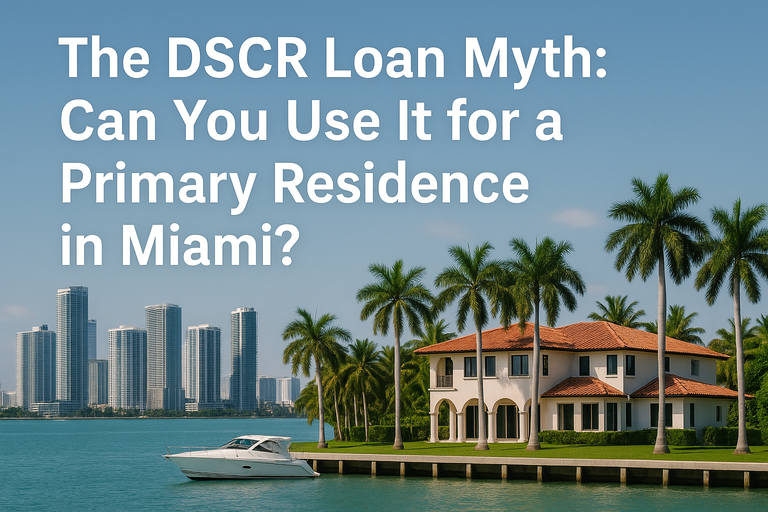
But one question keeps coming up among buyers looking to move into Miami:
“Can you use a DSCR loan for a primary residence?”
Let’s clear up the confusion once and for all.
What Is a DSCR Loan, Really?
A Debt Service Coverage Ratio (DSCR) loan is designed for real estate investors, not homeowners.
Instead of verifying your personal income through pay stubs, tax returns, or employment history, lenders focus solely on whether the property’s rental income can cover the monthly loan payments.
In other words, if the property can “pay for itself,” you qualify—regardless of your job type or tax situation.
That’s what makes DSCR loans so popular in Miami’s vibrant rental market. They allow investors, especially self-employed individuals or foreign nationals, to buy income-producing properties without the red tape of traditional mortgages.
Can You Use a DSCR Loan for a Primary Residence?
The short answer: No, you can’t.
DSCR loans are strictly for investment properties, not homes you plan to live in.
Here’s why:
- DSCR loans are considered business-purpose loans, not consumer loans.
- They’re regulated differently under federal lending laws to prevent misuse.
- Lenders require a signed statement confirming that you will not occupy the property as your primary residence.
If you plan to live in the property—even part-time—it disqualifies it from DSCR financing.
Why You Can’t Get a DSCR Loan on a Primary Residence
Let’s dig into the “why” behind this rule.
- Regulatory Restrictions:
Consumer protection laws (like the Dodd-Frank Act) prohibit lenders from issuing certain non-qualified mortgage products, such as DSCR loans, for personal residences. These rules protect homeowners from risky loan structures that don’t assess personal income or ability to repay. - Investment-Based Underwriting:
DSCR loans are underwritten based on rental income projections—not personal affordability. If you live in the property, there’s no rental income to measure, so the DSCR calculation doesn’t work. - Risk Management for Lenders:
Lenders view investment loans differently from owner-occupied loans. They often charge slightly higher interest rates but accept more flexible qualification terms. Mixing the two creates regulatory and risk problems.
In short: DSCR loans are built for cash flow properties, not personal living spaces.
What Happens If You Live in a DSCR Property Anyway?
Let’s be blunt—it’s a serious violation.
If you falsely claim that a property will be an investment but end up living there, it’s considered mortgage fraud. That can trigger:
- Loan default or acceleration (the lender demands full repayment immediately)
- Legal action
- Permanent bans from borrowing through that lender or program again
Most DSCR lenders monitor occupancy through insurance records, mailing addresses, and even tax filings—so it’s not something you can easily hide.
What If You Want to Buy a Home to Live In?
If your goal is to live in the property, you’ll need a traditional or Non-QM owner-occupied loan instead.
Here are your main options:
- Conventional Loans (Fannie Mae/Freddie Mac):
Best if you have W-2 income, a strong credit score, and want the lowest possible rate. - Bank Statement Loans:
Perfect for self-employed buyers in Miami who don’t have consistent pay stubs but can prove income through bank deposits. - Asset-Based or 1099 Loans:
These Non-QM programs use your assets or freelance income to qualify. - FHA or VA Loans:
Great for first-time buyers or veterans looking for low down payments.
These options are specifically designed for primary residences, and they meet all consumer lending laws—unlike DSCR loans.
Can You Live in a DSCR Loan Property Part-Time?
This is another gray area many investors ask about.
For example, you might wonder:
“What if I buy a duplex, live in one unit, and rent out the other?”
Unfortunately, that still doesn’t qualify for a DSCR loan.
The property becomes partially owner-occupied, and that violates the loan’s investment-only rule.
If you want to live in one unit, you’ll need a primary residence loan, like a conventional or FHA duplex loan.
Why Investors Love DSCR Loans (for What They’re Meant For)
Just because you can’t use a DSCR loan for your own home doesn’t mean they’re not powerful tools.
In Miami’s fast-moving rental market, DSCR loans let investors:
- Close quickly without income verification
- Qualify through property cash flow rather than personal income
- Build larger portfolios across multiple rental units
- Attract foreign investors who can’t qualify for traditional U.S. mortgages
That’s why Miami’s Airbnb and long-term rental investors rely on DSCR loans—to grow wealth, not to buy a place to live.
Final Thoughts
So, can you get a DSCR loan on a primary residence?
No—you can’t live in a DSCR loan property.
DSCR loans are for investment purposes only, meant to help you build passive income, not buy your own home.
If your goal is to live in Miami and still build wealth through real estate, the smarter move is to:
- Buy your primary residence through a conventional or Non-QM loan, and
- Use DSCR loans for your rental properties.
That way, you stay compliant with lending rules—and still take full advantage of Miami’s incredible real estate opportunities.